Circular Economy
Rethink waste, value resources, and build sustainable habits together.
This workshop introduces the key principles of the circular economy, reduce, reuse, recycle, and compost, and explores how these can be applied in everyday life. Participants reflect on past and present practices and co-create ideas for a more resource-conscious future.
How to use this workshop
Each workshop is designed to be flexible. You’ll find multiple activities and exercises within each section: Simply mix and match the ones that best suit your class’s needs, age group, and available time. This allows you to create a personalised, engaging learning experience while staying within your preferred timeframe.
Workshop Overview
Learning Objectives
Understand the concept to Circular Economy
Engage in intergenerational activities related to the Circular Economy
Foster collaboration between generations for sustainable behaviour change
Duration
Flexible, 60–90 minutes recommended
Materials
- Introduction Presentation
- Mentioned resources (Digital and printable versions available)
- Pens, paper/flipchart, sticky notes
- For digital feedback: Mentimeter
All relevant materials can be found in the Tools & Materials section.
- More Info
- Workshop Structure
- Reflection & Discussion
- Follow-Up Activities
- Further Reading
In this session, we’ll explore the concept of the circular economy and how it helps reduce waste, conserve resources, and promote sustainability. We’ll dive into principles like reducing, reusing, recycling, and composting, and discuss how these practices can be applied in everyday life.
Together, we’ll learn how different generations can contribute to creating a more sustainable future. By the end, you’ll have practical tools to bring circular economy principles into your home, school, or community!
Within each section, you will find several activities and exercises. Select and combine those that best match your class’s needs, age group, and available time. This approach allows you to plan and deliver a tailored learning experience while staying within your intended timeframe
- Introducing the Circular Economy
- Explaining Key Principles
- Interactive Exercise
- Application Activity
- Evaluation & Feedback
| Activity description | Duration | Materials |
|---|---|---|
| Short Presentation: Use slides or a short video to introduce the concept of the circular economy. Explain its importance in protecting the environment, reducing dependency on raw materials, and minimising waste. Highlight real-world examples, such as companies adopting circular models (e.g., repairing old products, selling second-hand items). | 7–10 minutes | Slides from Introduction Presentation |
Discussion Prompt: | 5 minutes | — |
| Visual Brainstorm: Start with a question on a whiteboard or digital tool like Jamboard: “What do you think happens to your waste after you throw it away?” “Can you think of any ways to avoid creating waste in the first place?” Ask participants to write or draw their answers. Compare generational perspectives. | 5–7 minutes | Tools for brainstorming (whiteboard, sticky notes, or digital apps). |
Short Overview: | 7–10 minutes | Short video |
| Activity description | Duration | Materials |
|---|---|---|
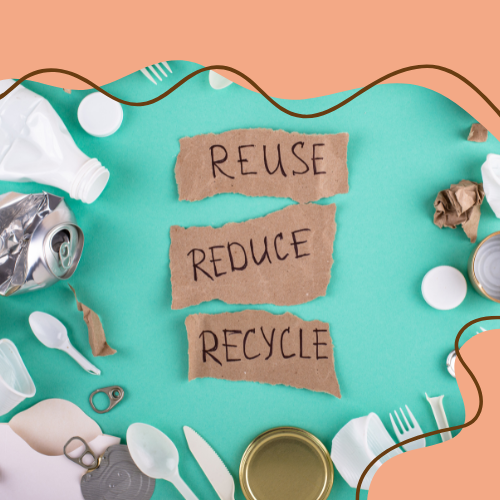
| Interactive Lecture: Explain the key principles: Reduce: Minimise waste by consuming less. Reuse: Extend the life of products through repair or repurposing. Recycle: Transform waste into new resources. Compost: Turn organic waste into valuable nutrients for the soil. Refuse: Say no to unnecessary items, like single-use plastics or freebies you don’t need. Repair: Fix broken items like clothes, electronics, or furniture instead of replacing them. Share: Maximise use of products by sharing, lending, or renting instead of owning everything individually. Refill: Choose refillable options for products like water bottles, cleaning supplies, or toiletries to cut down packaging waste. Rethink: Question habits, redesign systems, and imagine new ways of meeting needs that are less resource-intensive. | 5–10 minutes | Visual cues and a presentation to go along with it are provided for download |
| Benefits Discussion: Briefly explain the potential benefits, such as conserving natural resources, reducing pollution, and saving money. Ask participants to share examples of how they already apply these principles. | 5–10 minutes | — |
| “Principle Match-Up” Game: Provide participants with cards listing circular economy principles and real-world examples. Participants match the examples to the principles in small groups. | 10 minutes | Cards for match-up game (Printable or digital) |
| Discussion: Discuss the benefits of each principle and ask: “Which principles are easiest to apply?” “Which ones do you find most challenging?” | 5 minutes | — |
| Activity description | Duration | Materials |
|---|---|---|
| Personal Practice Comparison: Create small groups. Provide each group with a worksheet or discussion card listing various household activities. Task participants to identify current practices and opportunities to apply circular economy principles. Groups then present their findings, focusing on generational differences. | 20 minutes | Discussion cards can be found in the prepared materials (Printable or digital) |
| Generational Stories of Circular Practices: Divide participants into small intergenerational groups. Older participants share past practices, younger participants share modern approaches. Groups reflect and create a “top 3 practices” list. | 20 minutes | — |
| Activity description | Duration | Materials |
|---|---|---|
| Daily Routine Challenge: Provide a scenario of an individual’s daily routine with unsustainable habits. In groups, participants brainstorm sustainable alternatives using circular economy principles. Groups then share their solutions. | 30 minutes | Scenario handout “A day with the Müller family” (Printable or digital) |
Circular Economy Challenge: | 30 minutes | Props or images of “waste items” (a selection can be found in the digital materials) |
| Activity description | Duration | Materials |
|---|---|---|
| Group Reflection: Ask participants to share what was most surprising or useful and which practice they want to try at home. | 5 minutes | — |
| Feedback Collection: Distribute a feedback form or use a digital tool for anonymous responses. | 5–10 minutes | Feedback form or digital tool to collect feedback (e.g. Mentimeter) |
| “One Action Commitment”: Participants write down one circular economy principle they commit to applying and optionally share it with the group. | 5 minutes | Sticky notes or similar to collect all the commitments on a wall etc. |
| Feedback Wall: Participants leave anonymous feedback on sticky notes or a digital board. | 5–10 minutes | Tools for group feedback (whiteboard, sticky notes, or digital apps). |
At the end of the workshop, guide students in reflecting on what they learned using the following questions.
→ See also the reflection activity in the workshop pattern.
Additional questions:
- How do you think the circular economy can impact our community?
- What challenges might you face when trying to apply circular economy principles in your daily life?
- How can you encourage others around you (family, friends, classmates) to adopt more sustainable practices?
- What are some everyday items you might start viewing as resources rather than waste?
- How do you think circular economy principles could be integrated into your school or workplace?
- What did you learn from hearing about practices from different generations?
- How do you feel about the idea of rethinking waste as a resource?
- What’s one thing you’ll do differently after today’s session?
Assign a small project or activity for students to do at home.
Activity:
Implement one small change at home that can contribute to the circular economy.
→ See also the tool collection for other materials.
Looping – Sort, recycle, smile (App)
A useful app that helps people identify how to properly recycle or dispose of various household items.
Upcycle That
An online platform providing creative ideas for upcycling and repurposing everyday items.
The Ellen MacArthur Foundation
An educational platform with free resources, including courses, videos, and reports to learn more about circular economy principles.