Composting at Home
Turn food scraps into soil and learn the value of natural cycles.
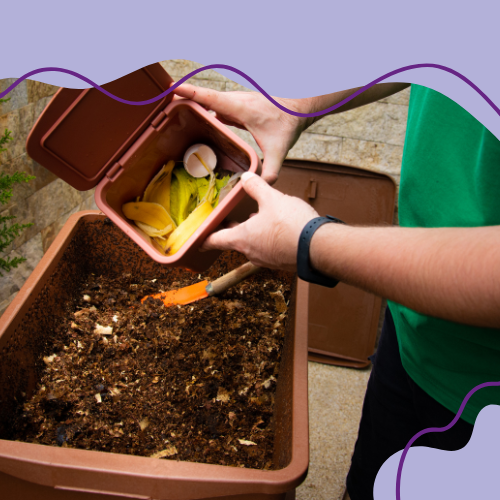
Help students and their families understand how composting can reduce waste and benefit the environment. In this hands-on workshop, participants explore which materials can be composted, how the composting process works, and how it contributes to more sustainable households.
How to use this workshop
Each workshop is designed to be flexible. You’ll find multiple activities and exercises within each section: Simply mix and match the ones that best suit your class’s needs, age group, and available time. This allows you to create a personalised, engaging learning experience while staying within your preferred timeframe.
Workshop Overview
Learning Objectives
Understand the benefits of composting
Engage in simple activities related to home composting methods
Foster collaboration between generations to promote practical ways of composting at home
Duration
Flexible, up to 2 hours
Materials
- Laptop/computer and projector
- Digital tools (mentimeter for feedback)
- Supplies for hands-on activities (e.g. compost bin, compostable and non-compostable materials)
- Resources such as IL4SH eBOOK (see resource list)
(Each activity will also list specific materials)
All relevant materials can be found in the Tools & Materials section.
- More Info
- Workshop Structure
- Reflection & Discussion
- Follow-Up Activities
- Tips for Educators
- Further Reading
Did you know that composting at home is a simple, yet powerful way to protect and enrich the environment? In this workshop, we will explore the benefits of home composting and share easy, sustainable methods to incorporate composting into your daily routine, making a positive impact on the environment.
Within each section, you will find several activities and exercises. Select and combine those that best match your class’s needs, age group, and available time. This approach allows you to plan and deliver a tailored learning experience while staying within your intended timeframe
- Introduction to Composting at Home
- Composting Manual
- Interactive Group Exercise
- Evaluation & Feedback
| Activity description | Duration | Materials |
|---|---|---|
Introductory Presentation Provide an overview of composting: “What is composting” – Explain the process of composting of organic materials breaking down into nutrient-rich soil. “Types of composting” – Aerobic (oxygen required), Anaerobic (without oxygen), Vermicomposting (decomposing using worms) “Benefits of Composting” – Natural fertilizer production, decreasing greenhouse gas emissions, reducing waste. | 10-15 Minutes | Slides or a short video e.g. 🗑 Composting for Kids | What is Composting? | Fact Files for Kids | Twinkl USA – YouTube |
Citizen Science and IGL Tie-in Explain how tracking home composting data can contribute to scientific research on waste management trends. Connect with global sustainability goals. Discuss how IGL can be beneficial to this workshop setting and encourage participating generations to be ready to share their perspectives. | 10-15 Minutes | IL4SH eBook |
| Discussion Prompts: “What do you throw away every day that could be composted?” “How does reducing waste at home impact the environment?? | 7-10 Minutes |
| Activity description | Duration | Materials |
|---|---|---|
Compostable Materials Compostable Materials: Green (nitrogen-rich) – tea bags, grass clippings, fruit and veggies etc. Vs Browns (carbon rich) – cardboards, sawdust, dry leaves etc. Non-Compostable Materials: Meat, dairy, synthetic materials etc. | 5–10 Minutes | Bring materials to the workshop to showcase, Presentation/images Printable Infographic |
| Delivery of Step-by-Step Instructions: Basic composting bin, garden fork/shovel. Alternatively – DIY containers with drilled holes for aeration. | 10-15 Minutes | Inside Nature | Infographic: How-To Compost | Blog | Nature | PBS |
| Layering & Maintenance: Perfom the layering in real time: Alternate green and brown layers, keep moist but not soggy, turn the pile every X amount of time for aeration etc. | 10 minutes | |
Discussion – Trouble Shooting Common Issues: Bad smells – probably too much green material Too dry – add more water, don’t overdo it Pile not breaking down – Add more greens and turn the pile | 5 minutes |
| Activity description | Duration | Materials |
|---|---|---|
Divide participants into 5-6 person groups. Keep an even balance of generations within groups. Facilitator will observe and guide group, be prepared to answer any questions and offer tips Activity Steps: Task aim – Build compost bin, choose and layer materials wisely Sorting materials – Provide the materials and ask groups to separate them into the 2 categories (green and brown) Building the Bin – Begin layering, keep track of their process, be ready to explain the reasoning behind their actions Citizen Science Element: Participants should document their setup and predict decomposition timelines. Documents could be uploaded on relevant CS databases. | 30 Minutes | Small compost bin for each group, Collection of compostable and non-compostable materials CS databases: https://www.zooniverse.org/ |
| Intergenerational Conversation: Participants to engage in discussion within their groups. Reflect on the experience, discuss the difference in practices from their own time/perspective. Discussions to be used later in a wider setting. | 10 Minutes |
| Activity description | Duration | Materials |
|---|---|---|
Group Presentations Groups present their composting bins, explaining their material choices and layering techniques. Highlight creative solutions or thoughtful reasoning. Provide constructive feedback using criteria such as material selection, layering accuracy, and teamwork. | 15 Minutes | Laptop/computer and projector for presentations |
Feeedback Collection Distribute a short feedback form or use a digital tool like Mentimeter for anonymous responses. Questions can include: | 5-10 Minutes | Feedback form or digital tool to collect feedback e.g. https://www.mentimeter.com/ |
| Closing – Facilitator’s Recap Summarise the whole experience, what has been done today, pros and cons observed/expressed Share online resources | 5 Minutes | |
Take Home Message – Encouragement Motivate participants to start composting at home. They can share their experience with other family members, friends, etc. Provide certificate of attendance
|
At the end of the workshop, guide students in reflecting on what they learned using the following questions.
- What was the most surprising or useful insight you gained from today’s workshop?
- How can you incorporate what you learned at home?
- What changes can we implement as a class or school community?
Set up their own composting bin at home:
- Using the composting manual provided during this workshop, ask students to create a simple composting system using a composting bin to collect organic waste and start the composting process.
- Ask them to keep a simple log of added materials and the compost process
- They can use the resulting compost in their garden or plants.
- Finally, ask them to involve an older family member in the task and together to discuss observations and ways of making small sustainable changes
Consider using real-life examples to make the topic relatable.
Encourage students to share their family’s perspectives to deepen the intergenerational aspect.
Videos
- Why is Composting Good for the Environment?
- 🗑 Composting for Kids | What is Composting? | Fact Files for Kids | Twinkl USA – YouTube
Articles & Resources
- Composting 101
- The Top Benefits of Home Composting Materia Rinnovabile | Renewable Matter
- The Green, Brown, and Beautiful Story of Compost
- How to compost—and why it’s good for the environment
- https://www.sciencelearn.org.nz/resources/2384-participatory-science-and-composting-capow
- https://il4sh-project.eu/
- https://il4sh-project.eu/ebook-on-intergenerational-learning/
- Composting At Home | US EPA
- Composting: The simple climate solution you can do at home | One Earth
- https://www.researchgate.net/publication/363799275_Household_food_waste_composting_habits_and_behaviours_in_Hungary_A_segmentation_study
- https://www.researchgate.net/publication/337826767_The_contribution_of_home_composting_to_environmental_protection